

Calcium Carbonate in the Plastics Industry | Applications, Benefits, and Impact on Product Quality
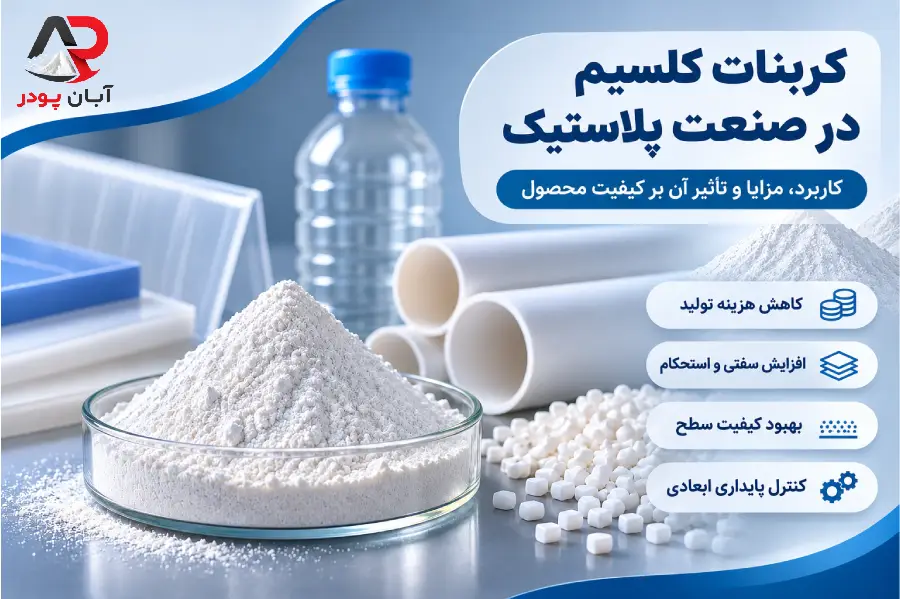
Calcium Carbonate in the Plastics Industry: Calcium carbonate is one of the most well-known mineral fillers.
The plastics industry is a major consumer of mineral fillers, and among the minerals utilized in this sector, calcium carbonate holds a special position.
It is not used solely to reduce the proportion of polymer materials within formulations.
In fact, the careful selection of calcium carbonate—considering its particle size distribution, type, and specific properties—can significantly influence factors such as surface appearance, stiffness, hardness, dimensional stability, and even the processing conditions during the manufacturing of plastic products.
Consequently, the application of calcium carbonate in the plastics industry must be tailored to the specific type of polymer, the final product, and the required performance specifications.
A powder suitable for PVC products is not necessarily the optimal choice for a polypropylene component or polyethylene-based products.
In this article from Aban Powder, we examine the precise role that calcium carbonate plays in the production of plastic products, why it is used, and which specifications should be considered when selecting and purchasing it.
Why is calcium carbonate used in the plastics industry?
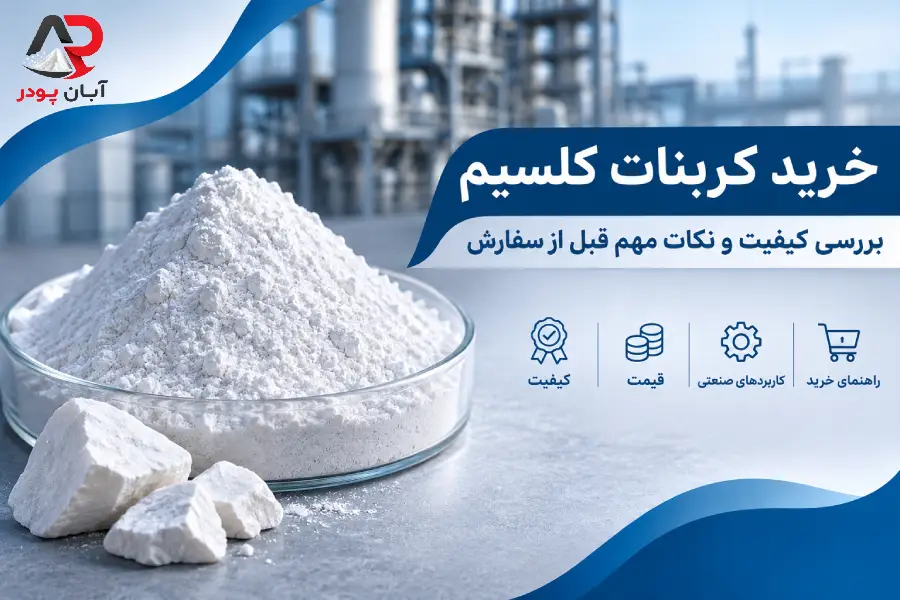
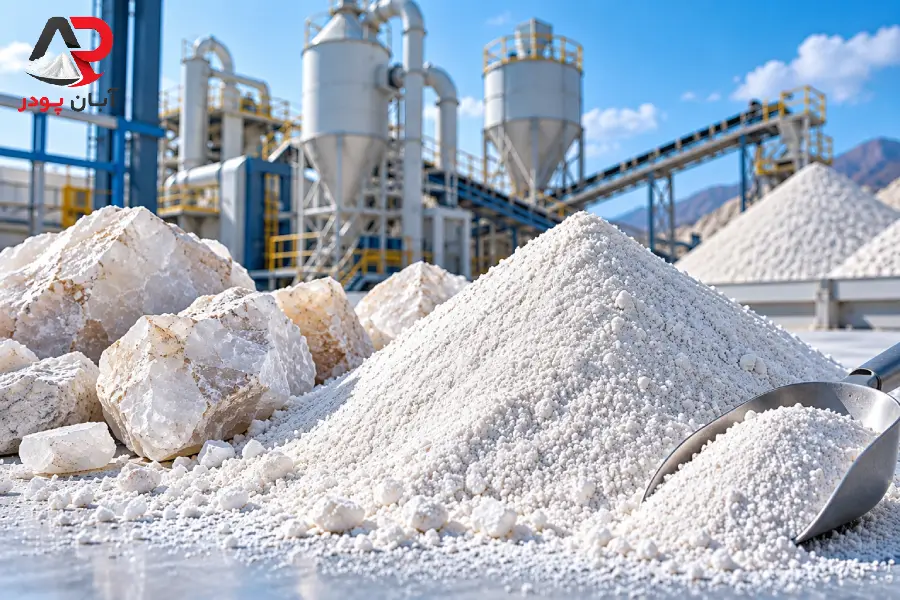
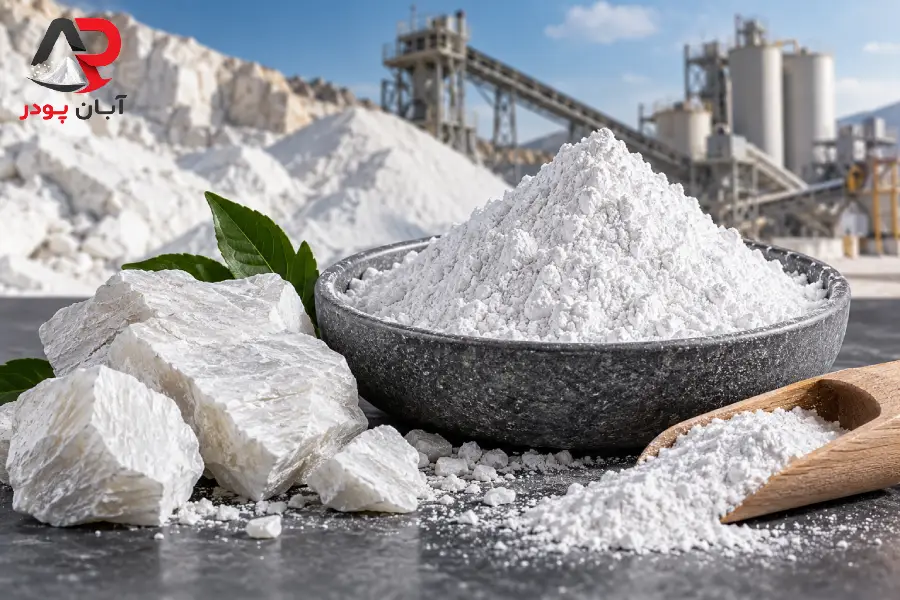
Calcium carbonate (CaCO3) is one of the most widely used mineral fillers in the polymer industry.
This mineral is utilized across a diverse range of polymer compounds and plastic products.
A primary reason for using calcium carbonate is its ability to replace a portion of the polymer matrix with a mineral filler.
Consequently, its utility extends well beyond mere economic considerations.
Depending on the dosage, the type of polymer, and the specific characteristics of the powder, calcium carbonate can help control certain mechanical properties, enhance dimensional stability, and refine the visual appearance of the final product.
For this reason, calcium carbonate should be viewed as an integral component of the product formulation
—rather than simply a low-cost powder used merely to increase volume.
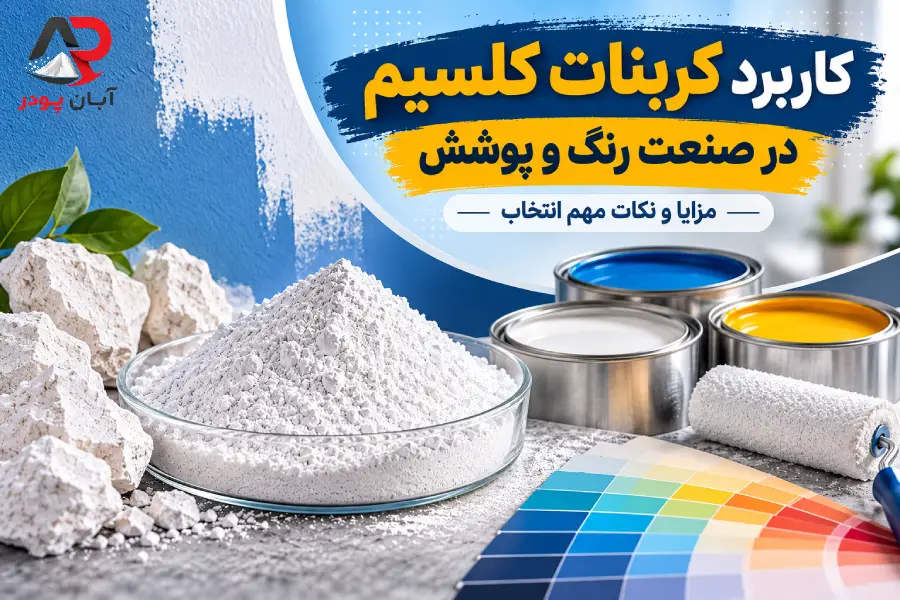
For more information: Calcium carbonate in the paint and coatings industry
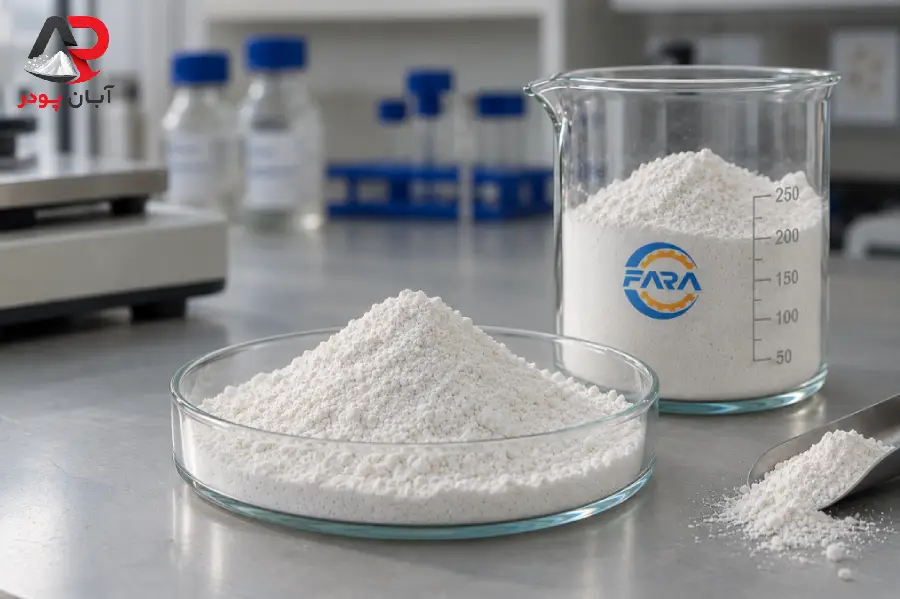
What is the use of calcium carbonate in plastics?
The specific application of calcium carbonate powder in the plastics industry depends on the formulation and the type of product.
This useful material can be used as a mineral filler in various polymer compounds.
Also, this mineral is used as one of the fillers in the production of plastic products, which increases the hardness, strength and wear resistance of plastic products.
Among its various applications, it can be used in some products made of polypropylene (PP), PVC
and polyethylene (PE), filler masterbatches, polymer compounds, profiles, injection parts, sheets, pipes and some
Plastic films pointed.
In each of these applications, the technical specifications and amount of calcium carbonate consumption are different and should be selected according to the needs of the production line.
What effect does calcium carbonate have on the quality of plastic products?
There is no single, definitive answer to this question.
This is because the outcome depends on factors such as particle size, the type of polymer, surface modification, particle size distribution, the dosage used, and the quality of particle dispersion within the polymer matrix.
By selecting the appropriate filler, it is possible to control or enhance certain product properties.
Conversely, using an unsuitable grade or an inappropriate amount can lead to the opposite effect.
1. Increasing product stiffness:
Increasing Product Stiffness: One of the significant effects of calcium carbonate is its ability to enhance the modulus and stiffness of certain polymer compounds.
This characteristic is particularly valuable for products that require high resistance to deformation and the ability to maintain their shape, making it a sought-after feature.
It should be noted that increasing the filler content does not necessarily improve all mechanical properties; therefore, the formulation must be designed with a balanced approach.
2. Improvement of dimensional stability:
Another advantage of calcium carbonate is that it contributes to dimensional stability in many polymer products.
During the manufacturing process, controlling dimensional changes is important for many plastic parts.
The proper use of mineral fillers, such as calcium carbonate, helps enhance dimensional stability and control shrinkage in many formulations.
This is because polymers may undergo dimensional changes or shrinkage during heating and cooling cycles.
3. Impact on the product’s appearance and surface:
The particle size, whiteness, color, and dispersion characteristics of calcium carbonate can influence the appearance of the final product.
Consequently, for plastic products where visual quality is of high importance,
relying solely on the percentage of CaCO3 in the formulation is insufficient; specifications such as particle size distribution, whiteness, and the uniformity of the powder must also be carefully evaluated.
4. Controlling the cost of raw materials:
One of the primary reasons for using calcium carbonate in plastic products is to reduce formulation costs.
Base polymers account for a significant portion of raw material production costs;
consequently, the controlled use of an appropriate mineral filler can help reduce the consumption of these raw materials.
In most formulations, a portion of the polymer can be replaced with a mineral filler.
Since the price of mineral fillers typically differs from that of polymer resins, this substitution can play a major role in managing raw material costs.
It is important to note, however, that using an excessive amount of calcium carbonate—solely to cut costs—can alter many of the product’s properties; therefore, the dosage must be determined based on the desired quality and the specific formulation.
5. Impact on the production process:
In addition to affecting the final product, calcium carbonate can also influence the behavior of materials during the production process.
Factors such as moisture content, particle size, powder dispersion, and the type of surface coating (in the context of polymers) can impact the processability and mixing of the compound.
For this reason, two types of calcium carbonate with similar purity levels may not exhibit the same behavior on a production line.
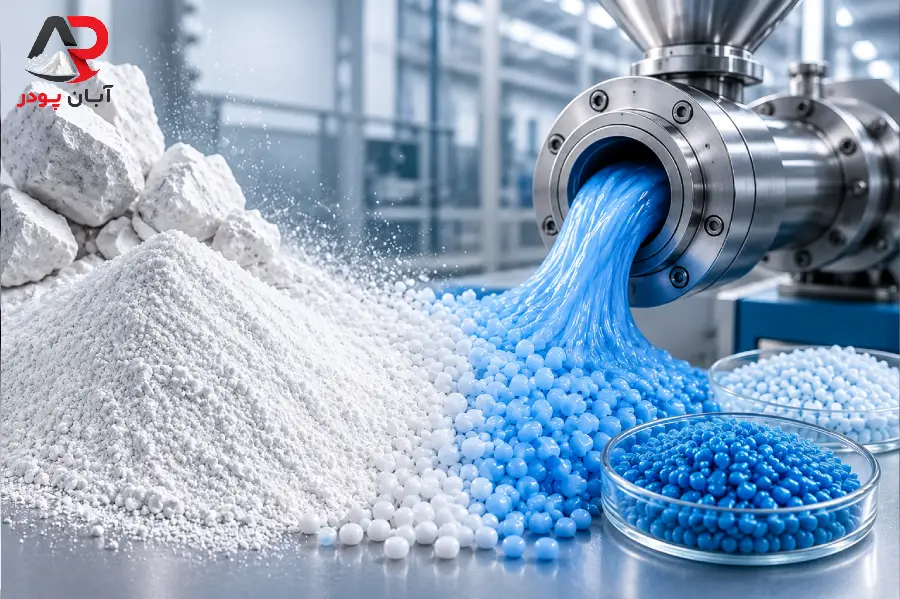
Calcium Carbonate in Polypropylene (PP)
It is a strong, rigid, crystalline thermoplastic derived from the monomer propene (also known as propylene).
This linear hydrocarbon resin is considered the lightest polymer among plastic products.
Polypropylene is a type of polymer in which calcium carbonate can be utilized as a filler.
It is important to note that if the particles are not well dispersed within the compound, or if an unsuitable grade is selected, certain mechanical properties may deteriorate.
Therefore, when selecting calcium carbonate for polypropylene, a balance must be struck between particle size, dosage, surface modification, and the desired characteristics of the final product.
Calcium Carbonate in Polyethylene (PE)
A portion of the polymer can be replaced with a mineral filler, which allows for the modification of properties—such as opacity, stiffness, or surface texture—to suit specific applications.
Consequently, calcium carbonate is utilized in certain polyethylene formulations.
It can be employed in products such as molded parts, specific types of films, and polyethylene compounds.
A critical factor in this application is the uniformity of particle distribution; the presence of powder agglomerates or coarse particles can negatively affect the surface quality and consistency of the final product.
Therefore, ensuring proper dispersion of the powder and maintaining controlled particle size distribution are of great importance.
Calcium Carbonate in PVC
One of the significant application areas for calcium carbonate is PVC.
This mineral is used in various rigid and flexible PVC compounds.
In the PVC industry, calcium carbonate serves as a cost-effective filler.
It is typically introduced into the formulation and production line in powder form, helping the manufacturer reduce the final cost.
Moreover, if the quality is high, it can positively influence the product’s surface uniformity, appearance, and strength.
For products such as pipes, profiles, and certain PVC components, the selection of calcium carbonate must be based on the desired product characteristics and the specific formulation.
Factors such as moisture content, particle size, purity, and surface treatment of the powder can all impact its performance.
Also read: Calcium carbonate in the PVC industry
What is the significance of calcium carbonate particle size in the plastics industry?
One of the key criteria for selecting calcium carbonate for plastic production is particle size and distribution.
Particle shape and size are of great importance; the particle size distribution indicates the range within which the powder particles fall, as well as the proportion of coarse or ultra-fine particles present in the product.
Particle agglomeration or the presence of coarse particles can lead to processing issues or aesthetic defects in many products.
On the other hand, the use of ultra-fine mineral powder must be compatible with the production equipment and the formulation.
Therefore, the intended end-use should be the primary consideration when selecting the particle size distribution.
Application of Calcium Carbonate in Plastic Products
| Product | The potential role of calcium carbonate | An Important Point in Selection |
|---|---|---|
| PVC Pipe | Fillers and the adjustment of certain properties | Particle Size Distribution and Purity |
| UPVC Profile | Adjustment of stiffness and dimensional stability | Dispersion and Surface Quality |
| Masterbatch | Original Mineral Filler | Particle Size and Surface Modification |
| PP Compound | Increase in stiffness and modulus | Compatibility with polymers |
| PE Products | Formulation and Cost Management | Proper distribution |
| Plastic film | Use in specific formulations | Fine, controlled particles |
| Injection-molded parts | Adjusting properties and cost | Usage percentage and particle size |
What characteristics should calcium carbonate suitable for the plastics industry possess?
To select a suitable powder, it is necessary to consider several characteristics together:
Appropriate purity of calcium carbonate
Controlled and uniform granulation
Particle size tailored to the specific application
Controlled moisture content
Good whiteness for color-sensitive products
Low levels of undesirable impurities
Effective dispersion within the polymer matrix
Availability of surface-modified grades, if required
Consistent product specifications across different orders
The importance of each of the above factors varies depending on the type of plastic product.
Is a higher mesh size for calcium carbonate always better?
No; a common misconception when purchasing mineral powders is the belief that a finer powder automatically implies higher quality.
In the plastics industry, the objective is to select the appropriate particle size for a specific formulation.
One production line might require a finer powder, whereas another product may not necessitate the same particle size distribution.
Consequently, factors such as particle shape, mean particle size, particle size distribution, and surface quality are of great importance.
Therefore, rather than making a selection based solely on the mesh size, it is advisable to examine the product’s complete technical specifications.
Also read: What is the mesh sizing of mineral powders?
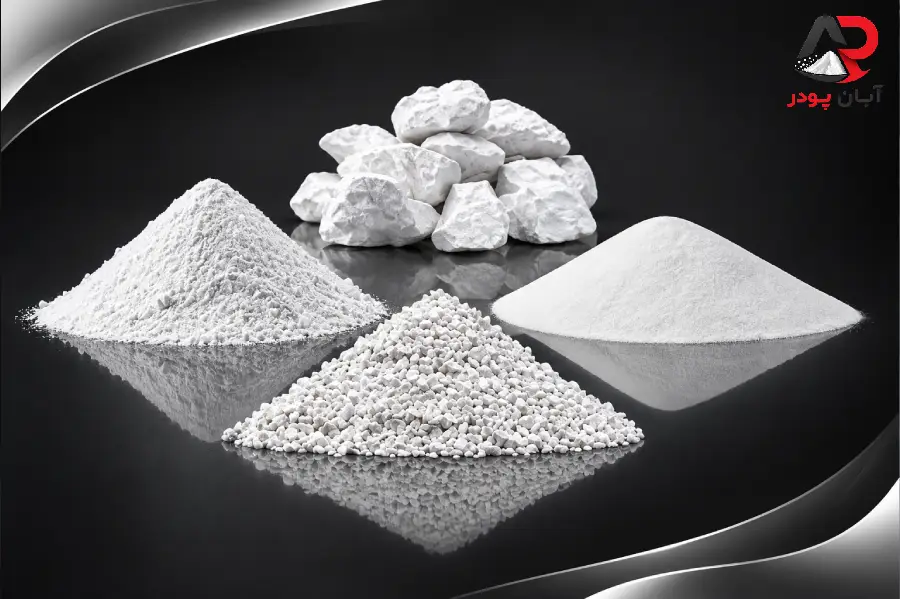
Calcium Carbonate | Aban Powder
What factors should be considered when purchasing calcium carbonate for the plastics industry?
Before selecting a product, it is advisable to first determine the type of polymer and its primary, end-use application.
For instance, the requirements of a manufacturer producing PVC profiles will differ from those of a manufacturer producing polyethylene film or injection-molded polypropylene (PP) parts.
Once the application is defined, specific parameters—such as whiteness, purity, granulation, moisture content, and particle size—must be evaluated.
If the formulation requires improved dispersion of the powder within the polymer matrix, the type of surface modification or coating applied to the powder also becomes a critical factor.
Consequently, for industrial production lines, maintaining consistent quality across different shipments is of great importance.
Significant variations in powder specifications from one order to the next can alter the material’s behavior on the production line.
Concluding Remarks
In the plastics industry, calcium carbonate serves as more than just a filler used to increase material volume.
When selected and utilized correctly, this mineral can play a significant role in controlling formulation costs, improving dimensional stability, increasing rigidity, and fine-tuning the appearance and processing characteristics of polymer products.
Factors such as the dosage, purity, particle size, moisture content, particle size distribution, type of polymer, and surface treatment of the calcium carbonate all directly influence the final outcome.
Consequently, no single type of calcium carbonate is suitable for every plastic product.
The optimal choice is achieved when the technical specifications of the powder are determined based on the specific polymer type, production line equipment, and the desired properties of the final product.
Aban Powder, with a focus on the production and supply of various industrial mineral powders—including micronized calcium carbonate—strives to meet the needs of manufacturers across diverse industries for high-quality raw materials with appropriate technical specifications.
At Aban Powder, factors such as whiteness, purity, particle size distribution, and product quality consistency are among the most critical criteria for the supply of mineral materials.
Manufacturers in the plastics, PVC, and other related industries can select the calcium carbonate best suited to their production line requirements by reviewing product specifications.
Isfahan Office: 031-45341361
Mobile: 09120776403
Factory Phone: 066-43349066