

Purchasing Calcium Carbonate | Quality Assessment and Key Considerations Before Ordering
Purchasing Calcium Carbonate: Calcium carbonate is one of the most widely used minerals across various industries.
For manufacturers who incorporate minerals into their production processes, the procurement of calcium carbonate represents a critical decision.
Due to its chemical and physical properties, ready availability, and versatility, this mineral is among the most extensively used materials in the production of paints, plastics, paper, rubber, construction materials, and various industrial products.
However, it is important to note that not all types of calcium carbonate share the same specifications or quality.
Variations in particle size, purity, moisture content, whiteness, and processing methods mean that specific types of calcium carbonate are suited for specific applications.
For instance, the calcium carbonate required for the paint industry must possess different characteristics than the product used in the manufacturing of plastic components.
Selecting the wrong type can lead to increased waste, a decline in the quality of the final product, and complications within the production process.
Therefore, before purchasing industrial-grade calcium carbonate, it is essential to carefully evaluate the intended application, the product’s technical specifications, and the specific requirements of the production line.
In this article from the Aban Powder website, we will explore the key methods for assessing the quality of calcium carbonate, the various types of this mineral, and essential points to consider before placing an order.
Why is the quality of calcium carbonate important in industries?
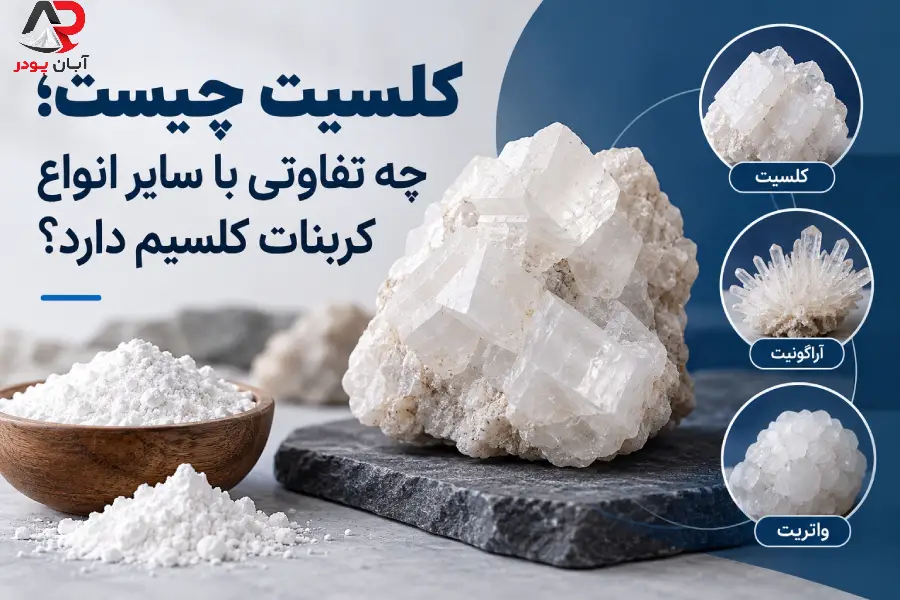
Calcium carbonate, with the chemical formula CaCO₃, is a widely used inorganic compound.
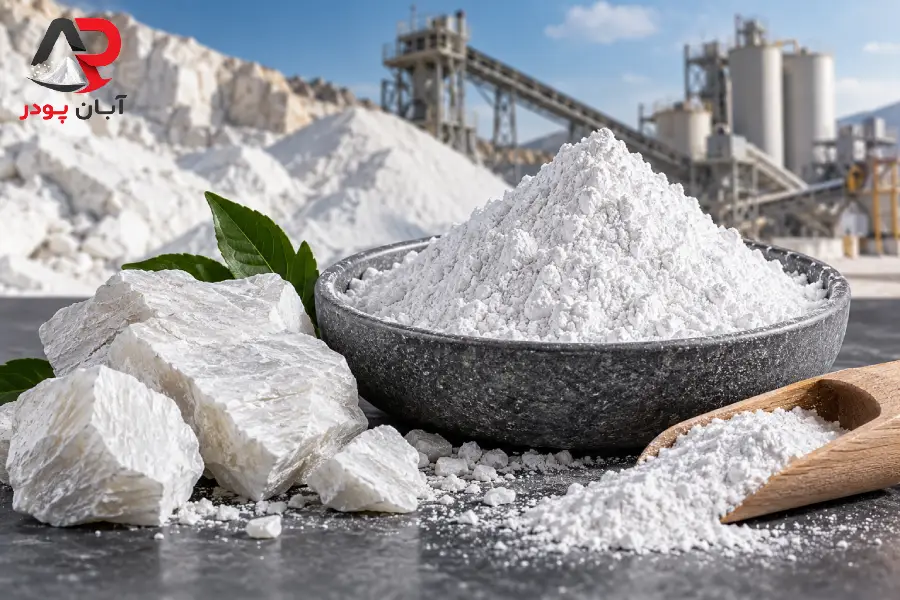
It occurs naturally in marble, limestone, and various other mineral sources.
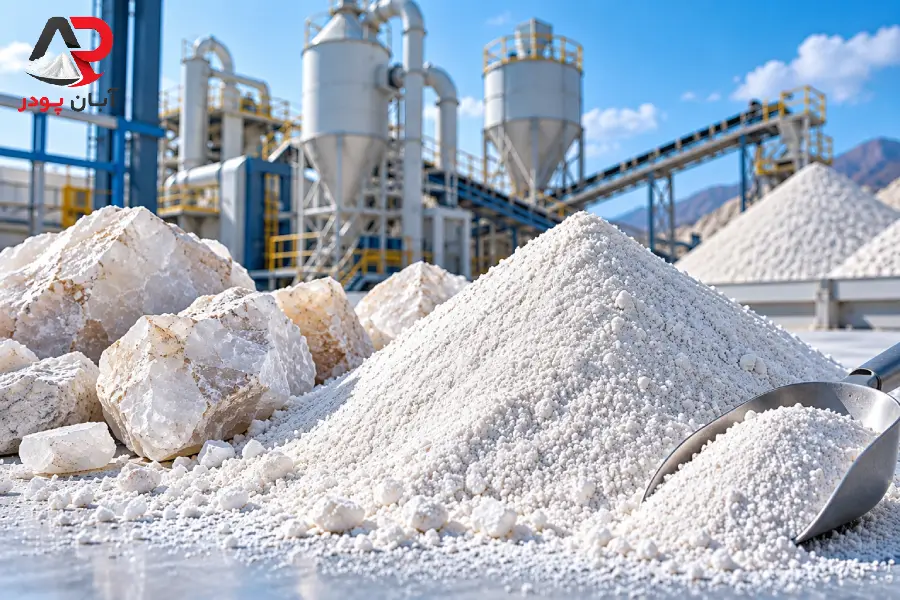
Following extraction, crushing, grinding, and sizing, this mineral is supplied in various industrial grades.
The quality of calcium carbonate can influence the appearance, physical properties, and processing characteristics of the final products.
For instance, the use of unsuitable powder in the manufacturing of plastic products may lead to poor particle dispersion or alterations in the product’s mechanical properties.
Selecting the appropriate grade offers the following benefits:
Helping to enhance the consistency of the final product’s quality
Improving certain physical and mechanical properties of the products
Assisting in the control of raw material costs
Reducing the likelihood of processing issues
Improving aesthetic characteristics for specific applications
Enabling better control over production formulations
Reducing quality fluctuations during continuous production
Optimizing the consumption of raw materials
Naturally, the extent of calcium carbonate’s impact depends on the specific formulation, the industry, the dosage used, and the production conditions.
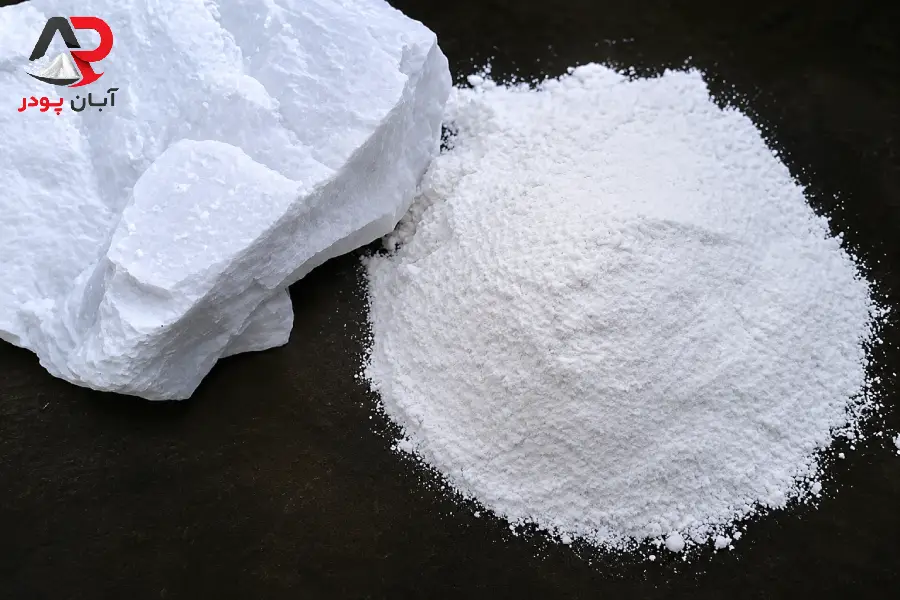
The Most Important Criteria for Identifying High-Quality Calcium Carbonate
When purchasing calcium carbonate, reviewing the product’s technical specifications is one of the most important steps that can help prevent potential issues during the production process.
1. Purity percentage of calcium carbonate
The purity of calcium carbonate is expressed in terms of mole percentage or weight percentage.
A higher content of CaCO3 indicates a higher level of purity.
The purity percentage reflects the amount of calcium carbonate present within the mineral material.
The presence of impurities—such as silica, iron compounds, magnesium, and other minerals—can affect the properties of the product.
In certain industrial applications, high purity is of critical importance, whereas in other applications, grades with different specifications may be suitable.
Therefore, the required purity level must be determined based on the standards of the production line at the time of purchase.
2. Particle Size and Mesh Grading
The term “mesh” is frequently encountered in scientific or commercial discussions, with its specific application varying depending on the industry.
Calcium carbonate powder is produced in various sizes, as each industry requires a specific particle size distribution.
For instance, in certain industrial coatings, the use of finer particles can help improve surface uniformity.
Conversely, for some construction materials, a different particle size distribution may be more appropriate.
It is important to note that the “mesh number” alone cannot determine the quality of a product.
For a more precise assessment, the particle size distribution should also be taken into account.
3. Whiteness degree of calcium carbonate
One of the important quality criteria for calcium carbonate is its degree of whiteness.
which is of great importance in the paper and paint industries, as well as in the production of certain plastic products.
The presence of color-imparting impurities can alter the appearance of both the powder and the final product.
Therefore, manufacturers requiring a white or light-colored product must consider color stability and whiteness when purchasing calcium carbonate.
However, a higher degree of whiteness does not always equate to better quality for every application; rather, it should be evaluated based on the specific requirements of the industry.
4. Moisture content of calcium carbonate
One of the factors that can affect the storage, transport, and use of calcium carbonate powder is the moisture level.
Excessive moisture can lead to powder clumping, affect flowability, and cause problems in certain production processes.
For this reason, monitoring moisture levels is of great importance, particularly in the plastics and masterbatch industries.
5. Particle Size Distribution
Two types of calcium carbonate may have similar particle sizes, yet differ in their particle size distribution.
This difference can affect surface properties, powder dispersion, and performance within a formulation.
Metrics such as D10, D50, and D90 are used to examine particle size distribution in greater detail.
6. Consistency of quality across different orders
One of the key criteria when selecting a supplier is the consistency of product quality across successive orders.
Significant variations in particle size, purity, or moisture content can lead to fluctuations in the production process.
Therefore, for industrial units with continuous consumption, the uniformity of technical specifications is of great importance.
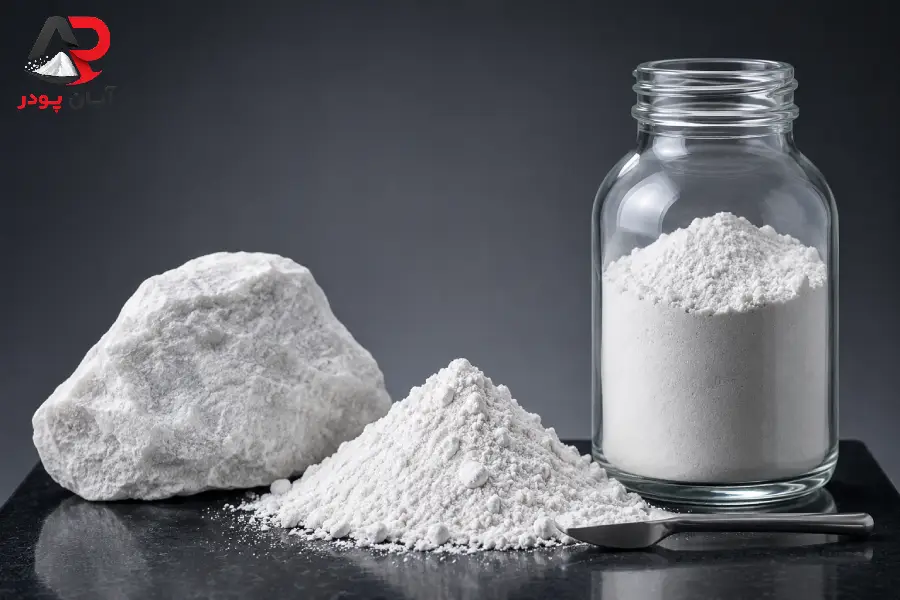
Types of Calcium Carbonate for Industrial Purchase
Understanding the different types of calcium carbonate helps buyers select a more suitable product for their specific application.
Ground Calcium Carbonate (GCC)
This type of calcium carbonate is extracted directly from mines and processed into a powder through crushing and grinding.
Due to its varied particle size distribution and versatility, this product is widely used across various sectors, including the plastics, rubber, paint, and construction industries.
Micronized Calcium Carbonate
Micronized calcium carbonate is a natural mineral processed into very fine, micron-sized particles using specialized grinding and classification equipment.
This type of powder is utilized in applications that require controlled particle size.
When purchasing micronized calcium carbonate, factors such as whiteness, particle size, and the uniformity of the particle size distribution are of great importance.
Also read: What is micronized calcium carbonate?
Coated calcium carbonate
Coated calcium carbonate is a product in which the surface of the particles is modified using substances such as stearic acid.
This process can improve the compatibility of the particles with certain polymers and facilitate better dispersion.
Coated calcium carbonate is used in various masterbatch and plastic formulations.
Precipitated Calcium Carbonate (PCC)
Precipitated calcium carbonate is produced through controlled chemical processes.
In this method, it is possible to control certain particle characteristics, such as shape, size, and structure.
This type of calcium carbonate is used in applications that require specific and controlled properties.
Guide to Selecting Calcium Carbonate for Various Industries
One of the important points to consider when purchasing calcium carbonate is selecting the product based on the type of industry.
| Type of calcium carbonate | Key Features | Industrial Applications | Advantages |
|---|---|---|---|
| Ground Calcium Carbonate (GCC) | Extraction from mineral sources, variety in grain size distribution, and purity | Plastics, paints, rubber, and construction materials | Affordable pricing, a variety of grades, and good availability |
| Micronized Calcium Carbonate | Very fine particles, controlled particle size distribution, and the capability to be produced with a high degree of whiteness. | Paint Manufacturing, Masterbatch, Plastics, Adhesives, and Industrial Coatings | Improving uniformity and enabling control over surface characteristics |
| Coated calcium carbonate | Surface coating, typically with stearic acid, for improved compatibility with certain polymers. | Masterbatch, plastic parts, and polymer products | Improving dispersion, reducing surface moisture absorption, and aiding processability |
| Precipitated Calcium Carbonate (PCC) | Controlled chemical production and the ability to adjust particle size and shape | Paper, Inks, Coatings, and Specialized Applications | More precise control of particle specifications and the capability to produce special grades |
Purchasing Calcium Carbonate for the Plastics Industry
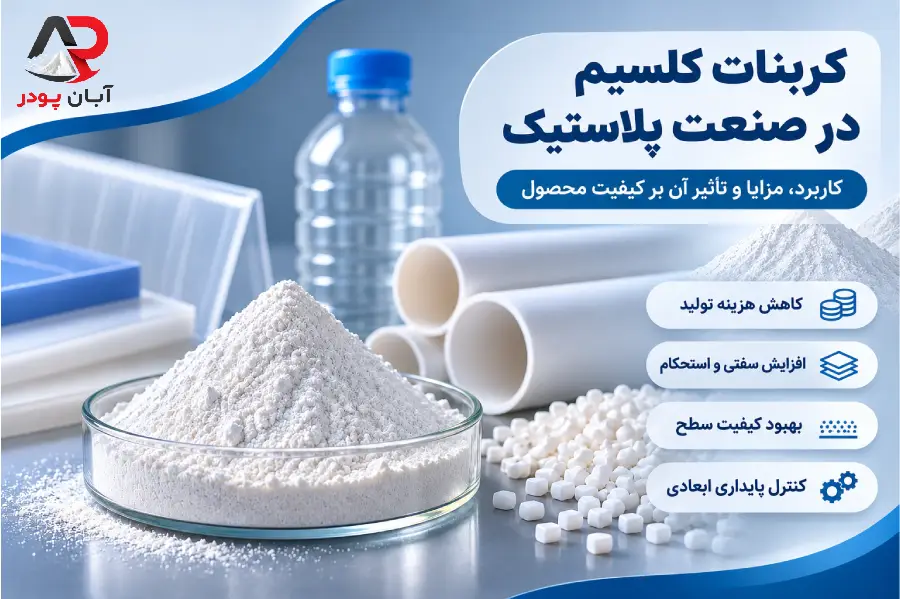
In the plastics industry, calcium carbonate is used as a mineral filler in the production of various products.
Selecting the appropriate grade can help manage raw material costs and control specific product characteristics.
In this industry, factors such as particle size, moisture content, dispersion, and compatibility with the polymer are of particular importance.
Also read: Calcium carbonate in the plastics industry
Purchasing Calcium Carbonate for the Paint Industry
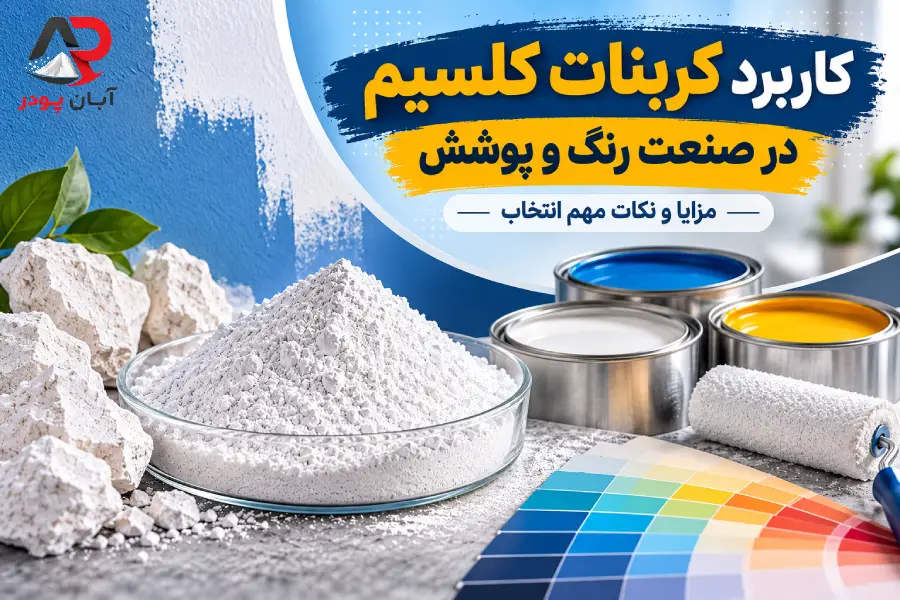
In the paint and coatings industry, calcium carbonate is used as a mineral filler.
Key criteria for product selection include oil absorption, particle size distribution, whiteness, and impurity levels.
Using the appropriate grade can influence the appearance, processability, and opacity (matteness) of the coating.
Also read: Calcium carbonate in the paint and coating industry
Purchasing calcium carbonate for the paper industry
In the paper industry, calcium carbonate is used as a filler and in certain paper coatings.
Key criteria for selecting this mineral include particle size, brightness, and compatibility with the production process.
Purchasing calcium carbonate for construction materials
Calcium carbonate is used in the production of certain construction adhesives, putties, mortars, and powdered compounds.
In these applications, appropriate particle size distribution and consistent quality contribute to the uniformity of the final product.

7 Important Points to Consider Before Ordering Calcium Carbonate
Before placing an order, it is advisable to examine a few key, fundamental points to ensure that the selected product aligns with the actual requirements of the production line.
1. Define the product application. First, determine the specific industry and the type of product for which the calcium carbonate will be used.
2. Establish the required technical specifications. Parameters such as particle size, purity, whiteness, moisture content, and other characteristics must be selected to align with your production line process.
3. Do not rely solely on the “mesh” size. Particle size distribution can also significantly impact product performance.
4. Consider whether a coated or uncoated product is required. The choice of surface coating should be based on the specific formulation and the base material.
5. Test a product sample whenever possible. Testing a sample under actual production conditions helps minimize the risk of selecting an unsuitable product.
6. Evaluate packaging and shipping conditions. Proper packaging is essential to protect the product from moisture and contamination.
7. Assess the supplier’s quality consistency. For industrial users, receiving a product with consistent specifications across different orders is of critical importance.
Common Mistakes When Purchasing Calcium Carbonate
Certain errors in the selection of raw materials can lead to increased production costs or a decline in the quality of the final product.
Key mistakes include the following:
Selecting a product based solely on a low price
Failing to consider the level of purity
Choosing an unsuitable mesh size for the production process
Overlooking the moisture content of the powder
Using coated calcium carbonate in an inappropriate formulation
Purchasing in bulk without prior product testing
Failing to verify the consistency of a supplier’s quality
Neglecting proper storage conditions
To avoid these issues, it is advisable to base procurement decisions on technical specifications and the actual requirements of the production line.
How can the quality of calcium carbonate be checked before purchase?
One practical method for evaluating the quality of calcium carbonate is to request a Technical Data Sheet (TDS).
This document typically provides information regarding the chemical and physical properties of the product.
Additionally, if necessary, one can request a Certificate of Analysis (COA) from the supplier to review the test results for a specific shipment.
For industrial orders, conducting preliminary tests and comparing the results against the standards required for the production line can lead to more informed decision-making.
It is important to note that the quality of calcium carbonate cannot be determined solely by its white appearance or the fineness of the powder; an accurate assessment requires technical and laboratory data.
Purchasing Calcium Carbonate from Aban Powder
One of the factors influencing the quality and stability of the production process across various industries is the selection of appropriate raw materials.
Given the variety of its grades and technical characteristics, calcium carbonate must also be selected in accordance with the specific requirements of each production unit.
Aban Powder operates in the field of industrial minerals and for buyers who intend to supply calcium carbonate,
Reviewing product specifications and ordering terms through this organization is one of the available options.
Before placing an order, it is advisable to clarify details such as consumption volume, particle size, the specific industry, and the required technical characteristics; this will facilitate the assessment of the most suitable option.
To learn more about mineral products, obtain additional information, and review the terms for purchasing calcium carbonate, you can visit the Aban Powder website.
Concluding Remarks
Purchasing calcium carbonate involves more than just selecting a mineral powder; it requires a precise understanding of technical specifications, intended applications, and production conditions.
Factors such as whiteness, purity, particle size, moisture content, and processing methods can significantly influence the performance of calcium carbonate across various industries.
Therefore, it is advisable to compare the product specifications against the requirements of your production line before placing an order—and, if possible, to test a sample.
Ultimately, selecting the appropriate grade and a reliable supplier can help maintain product quality, minimize process-related issues, and improve the management of production costs.