

How to Choose the Best Mineral Powder for Your Production Line
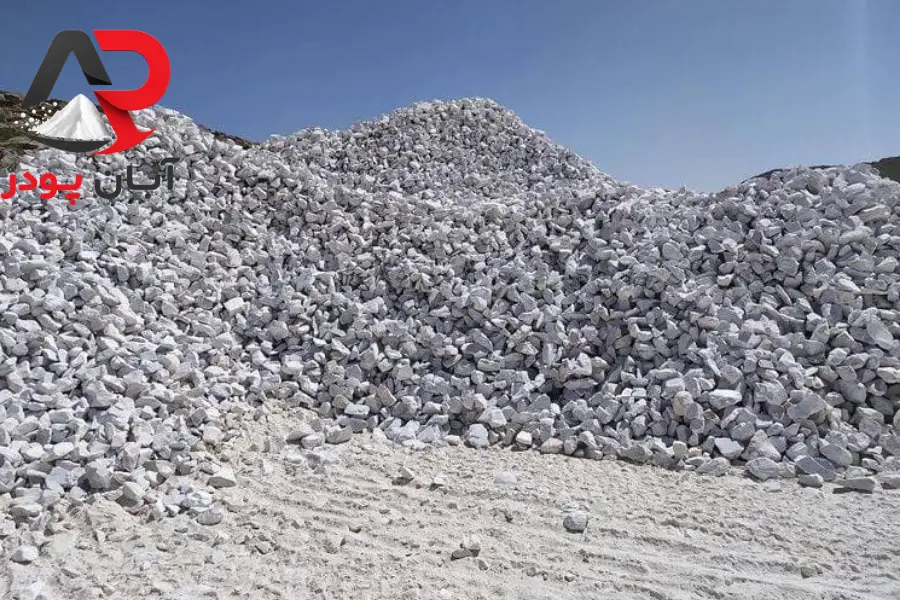
How do you choose the best mineral powder for your production line?
Choosing the right raw material is one of the most important decisions in any industrial production line. The quality of a raw material affects not only the quality of the final product but also production costs, waste levels, process speed and even the service life of equipment. That is why choosing the right mineral powder for a production line is not a decision that can be made on price alone.
Mineral powders are widely used across many industries, and each one can perform differently depending on properties such as purity, particle size grading, particle size, whiteness, chemical composition and intended application. For example, a material that works well in paint production may not be the ideal choice for a plastic formulation.
So what should you look for when buying mineral powder? What characteristics does the best raw material have? Does a lower price always mean a more economical purchase?
In this article, Aban Powder will help you make a better choice for your production line.
Why Is Choosing the Right Mineral Powder Important?
Mineral powder is used in many industrial products as a raw material, a filler or a property modifier. Its quality can therefore have a direct impact on the final product.
Using an unsuitable mineral powder can cause discoloration, reduced strength, problems in the production process, higher raw material consumption or lower product quality.
On the other hand, the right choice can deliver benefits such as:
- Improved final product quality
- Less production waste
- Better control of the production process
- Lower ancillary costs
- More consistent product quality
- Better raw material performance
- Fewer problems caused by impurities
and more.
For this reason, when buying you should not focus only on the name of the mineral; you need to check its technical specifications against the intended application.
What Are the Key Characteristics of a Suitable Mineral Powder?
To choose the right powder, several key properties need to be evaluated. The importance of each property also varies depending on the industry and the formulation being used.
1. Purity of the Mineral Powder
One of the most important criteria is the purity of the mineral. Undesirable impurities can affect the color, performance, reactivity and quality of the final product.
In some industries, even minor variations in raw material composition can make a difference in the final product. It is therefore best to review the product’s technical specifications and analysis before buying.
2. Particle Size Grading and Particle Size
Particle size grading is one of the key factors in the performance of mineral powders.
Mineral powders can be produced and supplied in different particle sizes, and the right size depends on the application. In many industrial applications, finer particles can help the material disperse better in the mix; however, this also depends on the type of material and the formulation.
That is why, when buying mineral powder, it is best to specify what gradation or mesh your production line requires.
3. Whiteness
Whiteness is especially important in industries such as paint, plastics, paper, masterbatch and similar products.
If the final product needs to be light-colored or white, choosing a raw material with an appropriate level of whiteness can influence the product’s visual quality.
That said, how much whiteness matters depends on the application, and it should not be used as the sole selection criterion.
4. Consistent Quality
One of the key characteristics of industrial raw materials is consistent quality across different orders.
If the specifications of a mineral powder vary significantly from shipment to shipment, the manufacturer may have to keep adjusting the formulation or production conditions.
Working with a supplier that can control product quality and specifications across orders is therefore very important for production lines.
The Right Mineral Powder Differs From Industry to Industry
A common mistake is assuming that a particular mineral powder is suitable for every industry.
In reality, the needs of a paint factory are different from those of a plant producing plastics, PVC, paper, adhesives or ceramics.
For example, when selecting minerals for different industries, the following factors may carry different weight:
- Particle size
- Purity level
- Whiteness
- Chemical composition
- Moisture content
- Dispersion in the product
- Compatibility with other raw materials
- Effect on the product’s mechanical properties
So before buying, you should first define the exact application of the mineral powder.
Benefits of Using High-Quality Mineral Powder
Using the right raw materials can bring manufacturers a number of benefits.
Improved Product Quality
One of the most important benefits is helping to maintain the quality and consistency of the final product.
Less Waste
Standard raw materials that match the formulation can reduce the likelihood of off-spec products.
Better Control of the Production Process
When raw material specifications are consistent, adjusting the production process also becomes easier.
Lower Hidden Costs
The purchase price is only part of the true cost of a raw material. A product that is cheaper to buy but leads to more waste, line stoppages or higher consumption of other materials is not necessarily the more economical choice.
Greater Production Stability
Using a uniform raw material can help produce products of more consistent quality.
Drawbacks of Choosing the Wrong Mineral Powder
Choosing the wrong raw materials can cause a range of problems.
Lower Final Product Quality
Changes in color, texture, strength or other product properties can be one result of using an unsuitable raw material.
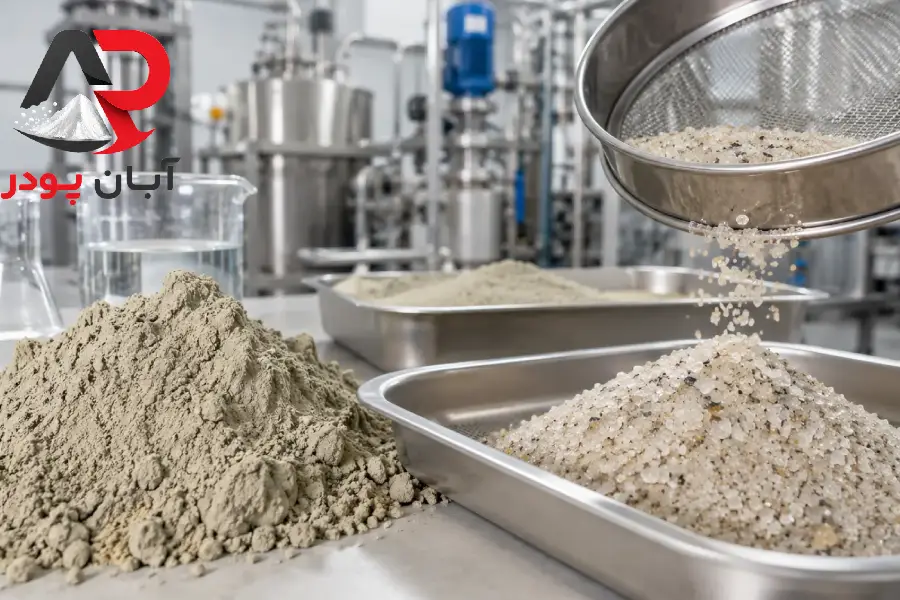
More Waste
If the mineral is not compatible with the formulation, the likelihood of producing off-spec products increases.
Higher Production Costs
Replacing raw materials, adjusting the formulation or repeating the production process can create additional costs.
Process Problems
Unsuitable particle size grading or the presence of impurities may affect the production process and equipment performance.
That is why simply choosing the cheapest option is not a sound way to make the decision.
How to Choose the Right Mineral Powder for Your Production Line
To make a better choice, you can follow a multi-step process.
Step 1: Define the Application
First, determine exactly which product the mineral powder will be used in.
For example, will the raw material be used in:
- Paint and coatings
- Plastics
- PVC
- Masterbatch
- Paper
- Adhesives
- Ceramics
- Drilling
- or other industrial applications
Which of these is it intended for?
Step 2: Determine the Required Technical Specifications
Once the application is clear, the required properties of the material should be defined.
These specifications may include purity, particle size grading, mesh, whiteness, moisture content and other technical properties.
Step 3: Test a Product Sample
If possible, it is best to test a sample of the material in your formulation or production process before placing a bulk order.
This helps establish how compatible the powder is with other raw materials and with your production line conditions.
Step 4: Review the Product Analysis and Specifications
One of the key points when buying industrial minerals is obtaining technical data and reviewing the product specifications.
This information helps the manufacturer compare the raw material against the real needs of the production line.
Step 5: Evaluate the Supplier
A supplier is not just a seller of raw materials; it can play an important role in the quality and continuity of your production.
It is therefore best to also take into account factors such as:
- Product quality
- Consistency of specifications
- Supply capacity
- Packaging
- Mesh grading
- Consulting services
- Track record
- and responsiveness
when making your decision.
The Role of Micronized Powders in Different Industries
Micronized powder is used in many industrial processes because of its fine particle size and specific physical properties.
Micronized calcium carbonate, talc, barite and silica are among the minerals that, depending on their technical specifications and application, can be used in a variety of industries.
The right type of micronized powder should be chosen based on the final product, the production line equipment and the formulation.
Calcium Carbonate: One of the Most Widely Used Industrial Minerals
Calcium carbonate is one of the most widely used minerals across industries and can be used in products such as paint, plastics, PVC, paper, adhesives and other industrial products.
However, calcium carbonate is also supplied in various types and specifications, and the right type should be selected based on the application and production requirements.
Factors such as purity, particle size grading, whiteness and technical specifications can be important in choosing the right calcium carbonate.
Mineral Powder Buying Guide | Aban Powder
Buying the right mineral powder plays an important role in the quality and performance of final products and should be tailored to the type of industry and production process.
When buying, consider factors such as purity, particle size grading, mesh, whiteness and consistent quality.
It is also best for the powder’s technical specifications to match the needs of your production line and product formulation.
Choosing a reputable supplier is also very important for a continuous supply and for maintaining raw material quality.
Aban Powder, offering a wide range of mineral and micronized powders, can be a suitable option for meeting the needs of various industries. For further guidance and complete information on buying the right mineral powder, we recommend getting in touch with Aban Powder’s consultants.
Is a Lower Price Always the Better Choice?
No. Price is one of the purchasing criteria, but it should not be the only one.
Suppose you have two mineral powders at different prices. If the cheaper option leads to higher consumption, more waste or lower product quality, its true cost to the factory may end up higher than that of the more expensive option.
It is therefore best to focus on the total cost of using the raw material when buying, not just the price per kilogram.
Simply put, in addition to an acceptable price, a suitable mineral powder must also match the needs of the production line in terms of quality and performance. Aban Powder is one of the most reputable suppliers of mineral powder and can be a good choice for you in terms of quality, performance and pricing.
Why Is Buying Mineral Powder From Aban Powder the Best Choice?
For factories, a continuous, high-quality supply of raw materials is very important. A production line stoppage caused by delays in material supply or changes in raw material specifications can result in significant costs.
That is why, before buying, it is best to look beyond price and also research the technical specifications, quality, supply arrangements and the seller’s ability to deliver products that meet your production needs.
Aban Powder is worth considering as a supplier of minerals and powders used across various industries for manufacturers looking for raw materials suited to their application.
To place your order, visit the Aban Powder online store, and for advice on material type, particle size grading and technical specifications, contact the Aban Powder consulting team .