

What Is Industrial Talc Powder? An Overview of Applications, Properties, and a Selection Guide
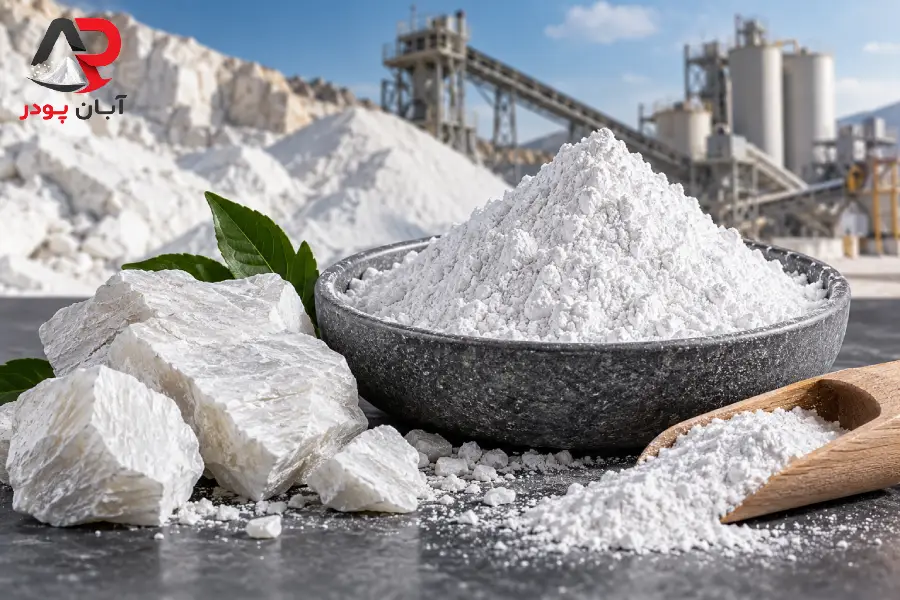
Industrial talc is a soft, white, lightweight mineral powder extracted from talc rock. It is processed through crushing, grinding, and sizing to prepare it for use across various industries.
Due to its softness, lubricity, moisture-absorbing properties, chemical stability, heat resistance, and excellent dispersibility, this powder is utilized in numerous industrial formulations as a filler, lubricant, anti-sticking agent, and modifier of product properties.
Talc is a mineral—specifically, a hydrated magnesium silicate. As a widely used industrial mineral, it is employed in many production lines thanks to characteristics such as its softness, platy (lamellar) structure, good heat resistance, and suitability as a mineral filler.
In sectors ranging from plastics and paints to ceramics, paper, and various other industrial products, selecting talc with the appropriate specifications can significantly impact both the quality of the final product and the efficiency of the production line.
However, not all types of industrial talc share the same specifications. Factors such as purity, whiteness, particle size, mesh size, moisture content, and particle size uniformity are critical considerations when purchasing talc powder.
In this article, we explore what talc powder is and examine its key characteristics:
What is talcum powder?
Read more: What is calcium carbonate powder?
Talc powder is a naturally occurring mineral extracted from the earth, composed of magnesium, silicon, oxygen, and hydrogen. Chemically, it is a hydrated magnesium silicate with the chemical formula Mg3Si4O10(OH)2.
Talc is a rock—also known as steatite or soapstone—consisting of varying proportions of the mineral talc, often combined with other minerals such as chlorite and carbonates.
Due to its unique structure, it is classified as a very soft mineral. Following extraction, processing, crushing, and grinding, it can be produced as a powder with various particle size distributions.
Magnesium hydrates and magnesium silicates are the primary constituents of this material. Powdered talc is one of the most widely used minerals in the world. To produce talc powder, magnesium silicate is first ground, then sieved, and subsequently treated with specific methods to add fragrance.
Talcum powder easily absorbs moisture, keeps the skin dry, and prevents the development of hives. It comes in various colors, such as green, white, and gray, and can even be colorless.
Key characteristics of industrial talc powder:
One of the reasons for the widespread use of talc in various industries is its unique set of physical and mineralogical properties. Some of the most significant characteristics of industrial talc include:
High softness
Ability to be produced in fine particle sizes
Platy (lamellar) particle structure
Good heat resistance
Suitability for use as a mineral filler
Capacity to enhance certain physical properties of products
Versatility for use in the formulations of various industries
Of course, the extent of the impact of each of these characteristics depends on the quality of the talc and the type of product being manufactured.
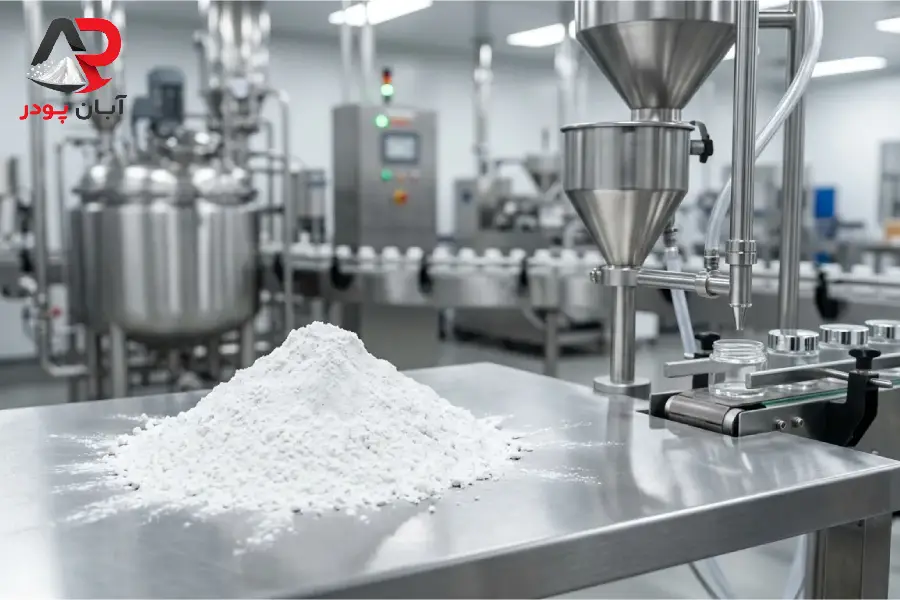
What are the uses of talcum powder?
Talc is not produced solely for one specific industry; depending on its technical specifications, this mineral can be used in various production lines.
Application of talc in the plastics industry:
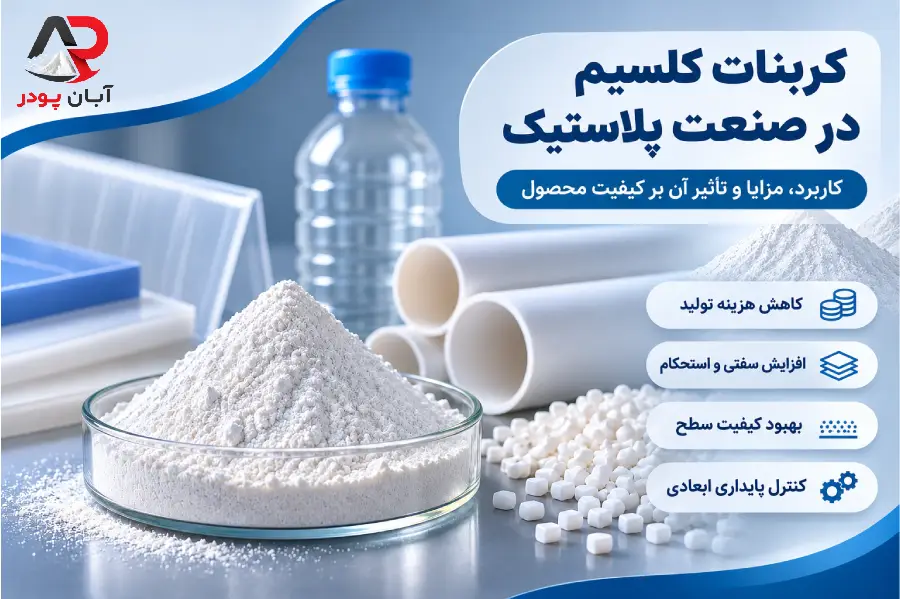
The plastics industry is a major consumer of industrial talc; in this sector, talc powder is utilized as a filler and a property modifier. It contributes to enhanced rigidity, dimensional stability, heat resistance, and surface smoothness, while also helping to reduce formulation costs.
Due to its mineral structure and excellent , talc helps reduce shrinkage, increase heat resistance, and improve surface appearance in various plastic products. Furthermore, it is chemically relatively stable and performs well within many plastic formulations.
Application of talc in the paint and coating industry:
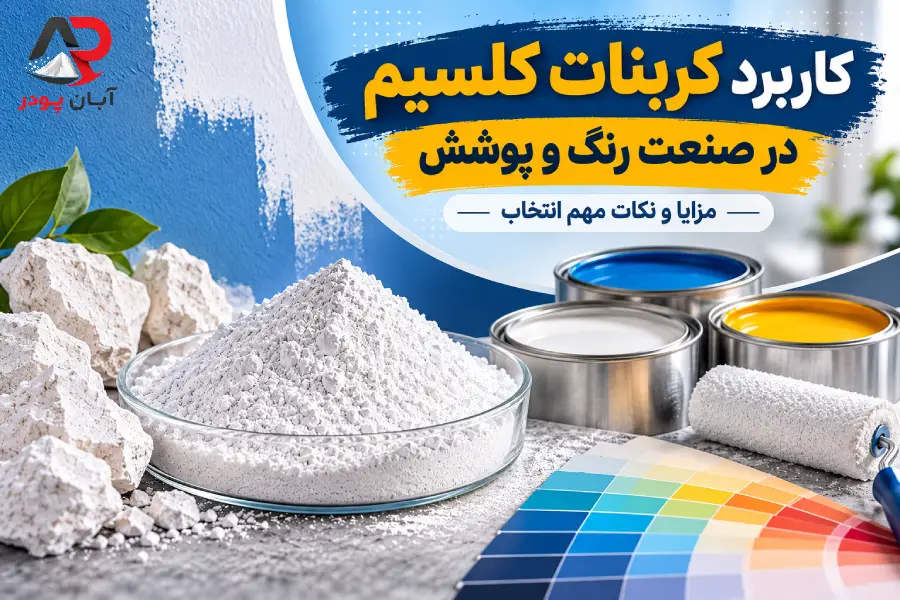
Talc is also utilized as a mineral ingredient in the production of certain industrial paints and coatings.
In the paint and coatings industry, talc powder serves as a filler, a texture regulator, and an agent for enhancing physical properties. It helps control gloss, improve paint stability, increase the durability of the coating, and reduce the consumption of more expensive raw materials.
The particle size distribution, whiteness, and purity of the talc are of great importance in this application, as the characteristics of the raw material directly influence the quality and appearance of the final coating.
In paint formulations, talc plays a significant role in determining the final quality, thanks to its softness, whiteness, chemical stability, and controlled oil absorption. The amount of talc used in a paint formulation depends on the specific formula, the type of coating, the desired quality standards, and the particle size.
Application of talc in the paper industry:
In the paper industry, minerals also play a significant role in the production process.
Talc powder is widely used as a filler in paper manufacturing and the printing industry. During the papermaking process, talc is added to the paper pulp as an additive. Utilizing this substance as a filler imparts properties such as high absorption capacity, water resistance, and sound insulation; however, the primary function of talc in paper production is to enhance the strength of the paper pulp.
Talc powder can constitute 20 to 30 percent of the paper pulp content. This amount is typically adjusted based on the type of paper and the customer’s requirements.
Application of talc in the ceramics industry:
Talc is also used in certain formulations within the ceramics industry. In this sector, the chemical composition and purity of the raw material are of great importance; therefore, the selection of the product must be based on the specific requirements of the production line.
Talc can influence properties such as water absorption, shrinkage, mechanical strength, thermal shock resistance, thermal expansion, and the color quality of the ceramic body after firing. In some formulations, the use of talc helps improve the firing process, control the properties of the ceramic body, and enhance the overall quality of the ceramic product.
What is talc powder mesh, and why is it important?
Also read: What is the mesh sizing of mineral powders?
One of the terms frequently heard when purchasing mineral powders is “mesh.”
In industrial applications, the size and distribution of particles are very important, and the selection of inappropriate granulation can affect the production process or the characteristics of the final product.
Therefore, it is not possible to designate a specific mesh size as the best option for all industries; for instance, the specifications of talc used in a plastic compound may differ from those required by a manufacturer of paints or ceramics.
What is the difference between industrial talc and regular talc?
Industrial talc generally refers to a product supplied with controlled specifications for use in manufacturing processes.
In an industrial setting, factors such as consistent quality are of paramount importance. A manufacturing plant cannot afford to receive raw materials with significantly different specifications for each order, as such variations could disrupt the production process.
For this reason, when selecting industrial talc, it is advisable to evaluate parameters such as purity, particle size distribution, moisture content, whiteness, and product uniformity.
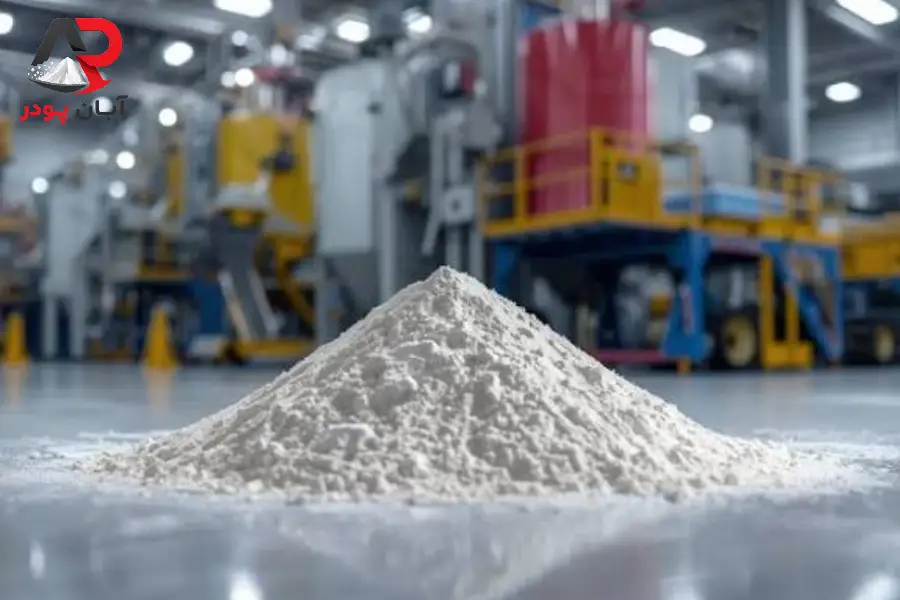
What points should be considered when buying talcum powder?
1. Talc Purity:
In industries where the appearance of the final product is significant, the whiteness level of the mineral can be a key selection criterion.
2. Particle Size and Mesh:
Particle size is one of the most critical specifications for talc powder. Before placing an order, it is essential to determine the specific particle size or range required by the production line.
3. Product Whiteness:
In various industries where appearance is of great importance, the whiteness level of the mineral can serve as a significant selection parameter.
4. Moisture Content:
Controlling moisture levels in mineral powders is highly important; the acceptable moisture content should be determined based on the specific industrial application and the conditions of the production process.
5. Quality Consistency:
For industrial orders—especially recurring purchases—consistency in product specifications is vital. Significant quality variations between different shipments can cause complications in adjusting formulations or managing the production line.
6. Packaging and Shipping Conditions:
For bulk orders, in addition to the quality of the product itself, factors such as the type of packaging, supply capacity, and shipping terms must also be evaluated.
How is the price of talcum powder determined?
The price of industrial talc powder is not fixed; rather, it is influenced by a variety of factors.
Key determinants of the final price include the purity of the mineral, the quality of the raw stone, the degree of whiteness, particle size distribution (granulometry), mesh size, the milling and micronization process, order volume, packaging type, and transportation costs.
Consequently, comparing the prices of different talc products without considering their specific technical specifications may not yield an accurate assessment.
What are the advantages of purchasing talc directly from the manufacturer? – Aban Powder
For factories with continuous consumption or high usage and order volumes, purchasing directly from the manufacturer can offer various advantages.
One of the most significant advantages is the ability to examine technical specifications in greater detail and select a product that aligns with the production line. Furthermore, for bulk orders, the capacity for consistent supply, quality stability, and effective planning for product delivery become highly important..
How do we select the right talc for our production line?
When selecting industrial talc, rather than focusing on a single characteristic—such as price or mesh size—it is better to evaluate a range of parameters..
First, the application of talc in the product must be determined. Subsequently, parameters such as particle size, purity, whiteness, moisture content, and the required quantity can be established.
For industrial orders, testing a product sample under actual production line conditions can also be a suitable method for evaluating the performance of the raw material.
Production and Supply of Industrial Talc Powder at Aban Powder
Aban Powder operates in the production and supply of mineral raw materials for various industries. Its mineral product portfolio includes talc, alongside items such as calcium carbonate, barite, and silica.
The ability to produce mineral powders with various particle size distributions, combined with strict product specification control and the capacity to fulfill bulk orders, enables industries to select raw materials precisely tailored to the requirements of their production lines.
For industrial orders, it is advisable to specify the intended application, required mesh size, consumption volume, and other relevant technical specifications prior to purchase, ensuring the selection of a product best suited for the production line.
Concluding Remarks:
Talc is a versatile mineral used across various industries, including the production of plastics, paints, paper, and ceramics. However, the quality of the talc and the alignment of its specific properties with the requirements of a given production line are of great importance.
Industrial talc powder is a soft, white, and widely used mineral employed in diverse sectors such as plastics, paints, paper, printing, ceramics, rubber, and cosmetics and personal care products. The industrial value of talc stems from characteristics such as its softness, lubricity, moisture absorption, chemical stability, and thermal resistance, as well as its utility as a filler and an agent for modifying product properties.
Purity, whiteness, moisture content, particle size, mesh, and quality consistency are among the most important factors to consider when selecting industrial talc.
Aban Powder offers talc powder in various particle size distributions, allowing buyers to select the product best suited to their specific industry.
If you intend to purchase talc powder for industrial use, it is advisable to determine the technical specifications required for your production line before placing an order, rather than selecting a product based solely on price. Choosing the right raw material can contribute to the stability of the production process and help achieve a higher quality in the final product.
If your production line requires calcium carbonate, talc, barite, or silica with specific technical specifications, please define the end-use and process requirements before placing an order. This ensures that the selected raw material is precise and tailored to your specific industrial needs. Aban Powder specializes in mineral powders, including calcium carbonate and various other industrial minerals.
When selecting a product, it is advisable to specify the end-use, required particle size, purity level, color, moisture content, and usage conditions in order to choose the most suitable product..
Aban Powder is a comprehensive source for the production and distribution of mineral materials.