

The Importance of Choosing the Right Mineral Powder
Minerals play a primary or complementary role in many production lines. Calcium carbonate, talc, barite and silica are among the materials used across various industries to improve quality, control physical properties, reduce costs and enhance product performance. Choosing the wrong mineral powder can lead to lower quality, more waste, equipment malfunctions and higher production costs.
Before purchasing minerals, every factory should define its technical requirements precisely. The type of final product, the formulation, the production line equipment, the consumption rate and the storage conditions are all factors that influence the choice of a suitable powder.
Consider the Type of Mineral
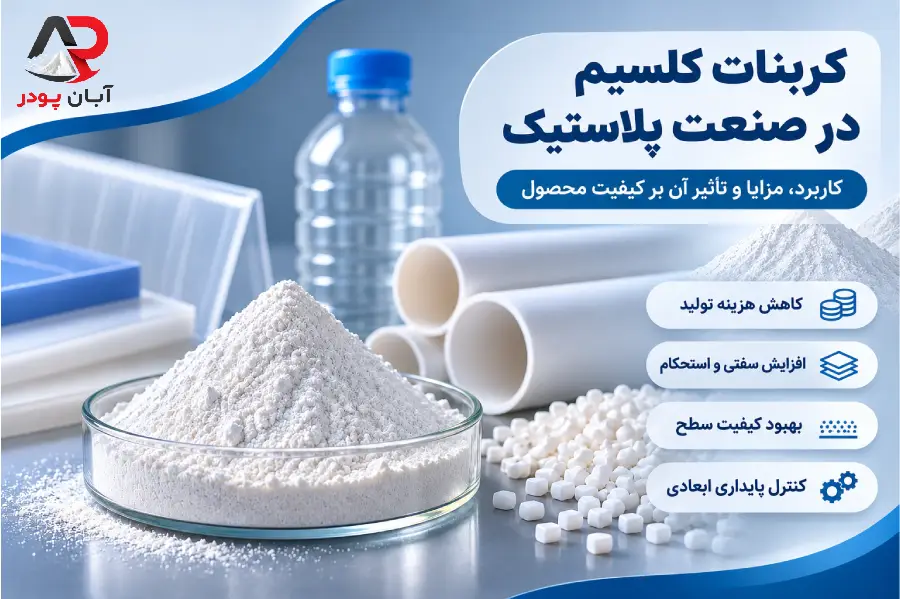
The first step is to choose the type of mineral that suits the application. Calcium carbonate is used in the paint, plastics, paper, adhesives and PVC industries. Thanks to its softness, heat resistance and moisture-absorbing properties, talc is used in plastics, paint, ceramics and hygiene products. Because of its high specific gravity, barite is used in drilling, paint manufacturing and certain industrial products. Silica is also widely used in the glass, foundry, ceramics, construction and filtration industries.
A thorough understanding of each mineral’s properties helps manufacturers select a product that is aligned with the ultimate goal of their production line.
Choosing the Right Mesh and Particle Size Grading
Mesh indicates the fineness of powder particles. A higher mesh number usually means finer particles. Very fine powders are suitable for applications where a smooth surface, uniform blending and high dispersibility are important. On the other hand, some industries require a coarser particle size grading.
Mesh selection should not be based solely on how fine the product is. In some production lines, very fine powder may increase dust, make conveying more difficult or require changes to the formulation. The best mesh should be determined based on the equipment, the production process and the final product.
Checking Purity and Whiteness
In many industries, the purity percentage of a mineral is very important. Impurities can cause discoloration, reduced strength, undesirable reactions in the formulation and lower product quality. For industries such as paint, paper, white plastics and decorative products, whiteness is also very important.
Calcium carbonate extracted from the high-quality mines of Aligudarz offers good purity and whiteness and can be used to manufacture a wide range of industrial products. Carrying out quality control tests before shipping the product gives the customer greater confidence.
Pay Attention to Moisture Content
The moisture content of a mineral powder is an important factor in storage and in its use on the production line. High moisture can cause the powder to clump, disrupt material handling, reduce dispersibility and create problems when blending with other materials. Some industries, such as plastics, adhesives and paint, are more sensitive to moisture.
Proper packaging and storage in a dry environment can preserve the quality of the powder until it is used. When purchasing, you should obtain sufficient information about the production, packaging and storage conditions of the product.
Checking Quality Consistency Across Orders
A common problem for some factories is variation in the quality of raw materials from one order to the next. Even if the first shipment is of good quality, changes in the mesh, color, purity or moisture of subsequent shipments can disrupt the production formula.
A professional supplier should be able to deliver a product with consistent, controllable specifications. Consistent quality allows a factory to run more steady production without constantly having to adjust equipment settings and formulations.
Getting a Sample and Testing It
Before buying in bulk, it is best to obtain a sample of the mineral powder and test it on the production line. The results of a practical trial show how compatible the product is with the factory’s formulation and equipment. At this stage, it is important to evaluate factors such as color, strength, dispersibility, mixing time and the surface quality of the final product.
Once the sample is approved, its technical specifications should be recorded so that future orders are supplied to the same standard.
Conclusion
Choosing the right mineral powder depends on a thorough understanding of the type of material, mesh, purity, whiteness, moisture content and conditions of use. Buying on price alone may create higher costs for the factory in the long run. Working with a producer that can provide consultation, samples, quality control and a reliable supply will improve the quality of the final product and reduce production line problems.